You might know how the conventional solar panel is made, but what about the foldable solar panel, is there any difference between them?
Introduction
Foldable solar panels offer a versatile solution for powering devices in remote or mobile environments. This article presents how a foldable solar panel is made, detailing the materials used, the structural design, the electrical circuit configuration, the fabrication workflow, and the resulting performance characteristics. The discussion focuses on practical considerations that influence durability, efficiency, and ease of deployment.
Materials
A foldable solar panel typically comprises several key materials selected for durability, lightness, and electrical performance:
- Photovoltaic cells: High-efficiency crystalline silicon cells or flexible thin-film cells, chosen according to weight, flexibility, and cost targets.
- Encapsulation layers: Transparent protective laminates (often ETFE or tempered glass for rigid panels) combined with polymer backsheets to provide insulation and environmental resistance.
- Adesive layers: Durable laminating resins and edge-sealing adhesives to protect against moisture ingress and mechanical stress.
- Flexible substrates: Polyimide or other polymer films used for lightweight, bendable configurations.
- Connectors and cabling: Weatherproof MC4-compatible or custom multi-pin connectors, paired with silicone-insulated cables designed for outdoor use.
- Structural hinges and frame: Lightweight metals (such as aluminum alloys) or high-strength composites for robust folding mechanisms.
- Protective coatings: Anti-reflective coatings on the photovoltaic surface and UV-stabilized coatings on exposed edges.
Structure
The mechanical architecture of a foldable panel balances compactness with resilience:
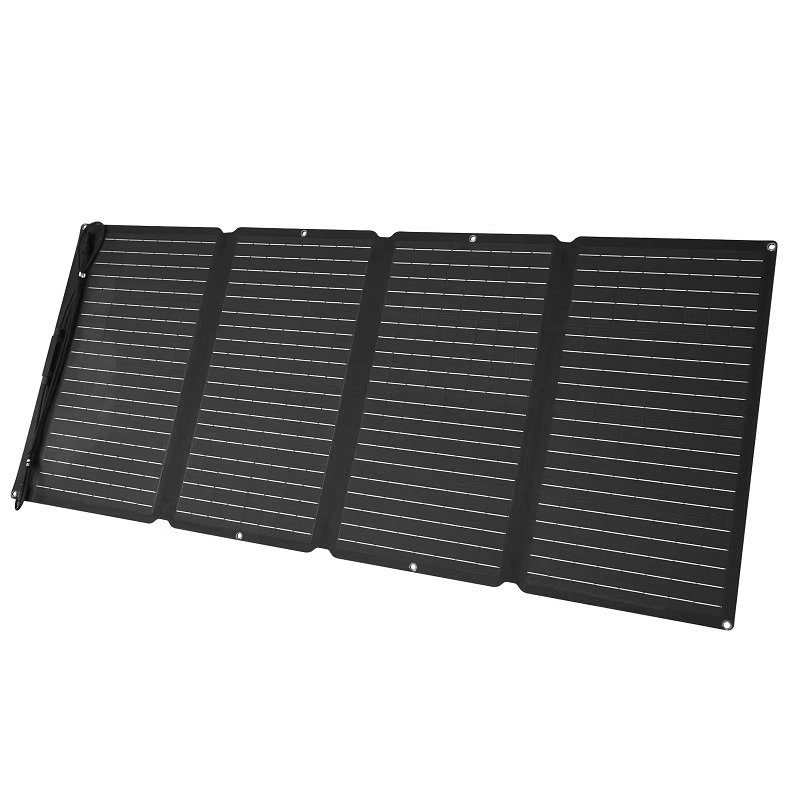
- Core layout: A series-connected or parallel-connected arrangement of solar cells arranged to maximize fill factor while allowing a compact, multi-panel geometry when folded.
- Folding mechanism: Hinge assemblies located along the panel’s shorter edges, enabling a compact two- or three-panel stack. Reinforced ribs and edge guards protect cells during handling.
- Layer stack: Outer protective layer, photovoltaic cell laminate, encapsulation/adhesion layers, backsheet, and optional rigid support frame. The stack is engineered to resist bending stresses at hinge lines.
- Sealing and waterproofing: Corner seals and edge gaskets prevent moisture penetration, with drainage features to minimize water accumulation.
- Portability features: Carrying handle, protective case, and latching mechanisms to secure the folded configuration during transport.
Electrical circuit design
The electrical design focuses on reliable energy capture, safe operation, and compatibility with typical storage or load configurations:
- Cell configuration: Determine series vs. parallel wiring to achieve the target voltage and current. A common approach is to connect cells in series to reach a practical open-circuit voltage, with parallel strings to boost current.
- Diodes: Bypass diodes across strings to mitigate shading effects and prevent reverse current flow that could damage cells.
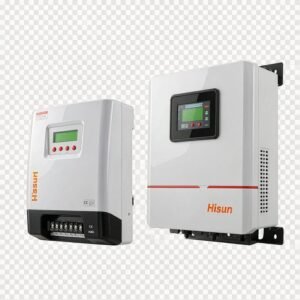
- Charge regulation: A dedicated charge controller (PWM or MPPT) regulates the voltage and current supplied to a battery or supercapacitor, optimizing energy transfer under varying illumination.
- Protection: Fuses or circuit breakers on the output to prevent overcurrent, along with surge protection and reverse-polarity safeguards.
- Cables and connectors: Optimized gauge to minimize voltage drop over the expected panel-to-battery distance, with weatherproof connectors to maintain isolation and safety.
- Monitoring: Optional sensors for voltage, current, and temperature, interfaced with a microcontroller for status indication and data logging.
Fabrication process
The fabrication sequence emphasizes precision and repeatability:
- Cell preparation: Inspect and trim photovoltaic cells, then test individual cells for short-circuit current and open-circuit voltage. Mount cells onto a preliminary substrate for alignment.
- Stringing and wiring: Solder interconnects to form the desired series/parallel configuration. Apply low-resistance, heat-resistant solder joints and reinforce with conductive adhesive where appropriate.
- Encapsulation: Lay down protective laminates and adhesives, place cells, and apply lamination pressure to ensure uniform bonding. Cure per material specifications to maximize optical and mechanical properties.
- Edge sealing: Apply edge seals and gaskets to protect the panel perimeter from moisture ingress and to accommodate folding hinges without damaging the cell layers.
- Hinge installation: Attach hinge assemblies along the designated fold lines, ensuring alignment, smooth operation, and adequate clearance to prevent cell contact during folding.
- Backing and framing: Attach structural backplates and, if required, an external frame or reinforcement ribs. Verify overall flatness and rigidity.
- Electrical integration: Install connectors, routing cables through designated channels, and connect to the charge controller input. Perform leakage and insulation testing.
- Protective finishing: Apply anti-reflective coatings, UV-stabilized surface treatments, and final quality inspection for cosmetic and functional integrity.
- Field testing: Conduct performance tests under standard test conditions, including I-V characterization, shading scenarios, and temperature variation, to verify efficiency and reliability.
Performance
The operational performance of a foldable solar panel is governed by several factors:
- Efficiency and power output: Peak efficiency depends on cell type and optical coatings. Real-world output is influenced by light intensity, angle of incidence, shading, and temperature.
- Durability: Fold lines, hinge mechanisms, and sealing integrity determine long-term resilience. Proper material choices and robust sealing minimize degradation under repeated folding.
- Weight and portability: The combination of lightweight substrates and compact folding mechanisms enhances transportability without compromising structural integrity.
- Temperature behavior: Higher operating temperatures may reduce voltage per cell while increasing current slightly; thermal management considerations can improve overall performance.
- System integration: Compatibility with storage devices and load requirements is essential. A well-mattered MPPT controller improves energy harvest across varying conditions.
- Environmental resilience: Water resistance, dust protection, and UV stability extend service life in outdoor settings.
Conclusion
A foldable solar panel integrates thoughtful material selection, a resilient mechanical design, a carefully engineered electrical circuit, and a methodical fabrication workflow. When executed with attention to environmental exposure and user needs, such a panel delivers reliable, portable solar power suitable for camping, emergency preparedness, disaster relief, and off-grid applications.